The West Wilson Corridor: A 2026 Buyer's Guide to Mt. Juliet, Green Hill, and Old Hickory's Wilson Side
The west Wilson County corridor is the part of Wilson County most relocators see first. Drive east on I-40 from Nashville, take Exit 226 at Mt. Juliet Road, and you're at the door…
TL;DR: The west Wilson County corridor — Mt. Juliet, Green Hill, and the Wilson-County side of Old Hickory Lake — forms the closest part of Wilson County to Nashville and BNA. It's the part of Wilson with the most retail density, the fastest new-construction growth, and the shortest commute to downtown Nashville. This guide covers the three sub-areas, home prices, commute math, and how to pick the right slice for your situation.
The west Wilson County corridor is the part of Wilson County most relocators see first. Drive east on I-40 from Nashville, take Exit 226 at Mt. Juliet Road, and you're at the doorstep of Providence Marketplace, Costco, the WeGo Star commuter rail, and a roughly 12-mile stretch of suburban Wilson County that runs from the Davidson County line east to roughly the Highway 109 corridor. Within that stretch sit three distinct sub-markets — Mt. Juliet proper, the newer city of Green Hill, and the Wilson-County side of Old Hickory Lake — and each has a different price tier, lot pattern, and lifestyle texture. Knowing the differences saves out-of-state buyers from making expensive mistakes.
Table of Contents
- What "West Wilson Corridor" Actually Means
- The Three Sub-Areas Explained
- Home Prices Across the Corridor
- Commute and Access: I-40, WeGo Star, Old Hickory Boulevard
- Schools Across the Corridor
- New Construction Pipeline
- Daily Life: Retail, Dining, Lake Access
- Pros and Cons of the Corridor
- Frequently Asked Questions
- A Local's Take
What "West Wilson Corridor" Actually Means
"West Wilson Corridor" isn't an official municipal designation — it's the working-realtor shorthand for the part of Wilson County that sits west of Highway 109 and within roughly 20 miles of downtown Nashville. Geographically, it covers:
- The City of Mt. Juliet (about 43,000 residents per 2024 estimates)
- The City of Green Hill, incorporated in 2020 from formerly-unincorporated land east of Mt. Juliet
- The Wilson-County side of Old Hickory Lake (which excludes Old Hickory Village in Davidson County)
- Smaller pockets of unincorporated Wilson County between these municipalities
What unites the corridor is access — every address in it sits within 30 minutes of downtown Nashville off-peak, within 25 minutes of BNA airport, and within 10-15 minutes of the Providence Marketplace retail cluster. Everything east of Highway 109 — Lebanon, Watertown, Gladeville — is what most agents call "central" or "east" Wilson, and it operates as a distinct market with different price patterns and a different commute profile.
The corridor as a whole has been the fastest-growing residential footprint in Wilson County since 2018, with new construction concentrated along Golden Bear Gateway, Curd Road, Lebanon Road, and the Mt. Juliet Road / Highway 109 spine.
The Three Sub-Areas Explained
Mt. Juliet Proper
The city of Mt. Juliet covers roughly 19 square miles centered on Mt. Juliet Road and the I-40 Exit 226 commercial cluster. Boundaries run roughly from the Davidson County line on the west to Highway 109 on the east, and from Old Hickory Lake on the north to a few miles south of I-40 on the south. Mt. Juliet is the most established of the three sub-areas — its city government was incorporated in 1972 and it has the deepest commercial spine of the corridor.
The character of Mt. Juliet inside the city limits is suburban with a strong commercial-arterial backbone. Mt. Juliet Road carries the bulk of retail and dining, from Providence Marketplace at the south end to Publix and the Mt. Juliet Library at the north. Residential subdivisions branch off Mt. Juliet Road in both directions, with newer construction concentrated on the east side along Golden Bear Gateway and Curd Road, and older established residential on the west side toward the Davidson County line.
Green Hill
Green Hill is the newest of the three — incorporated as a separate city in 2020 from formerly-unincorporated land east of Mt. Juliet. The city covers roughly 12 square miles centered on the Green Hill High School / Sayle Road area, bounded roughly by Lebanon Road on the south, Sayle Road on the north, Highway 109 on the east, and the Mt. Juliet city line on the west. Green Hill has about 7,000 residents per 2024 estimates and is growing fast.
The character of Green Hill is what Mt. Juliet looked like 15 years ago — newer subdivisions, less commercial density, and a feel that's somewhere between suburban and exurban. The city has been building its own municipal services (police, public works) since incorporation, and the residential growth has been driven heavily by new-construction subdivisions along the Sayle Road and Beckwith Road corridors. The full Green Hill Tennessee guide covers the city in more detail.
Old Hickory's Wilson Side
The Wilson-County side of Old Hickory Lake is the strip of waterfront and lake-adjacent properties along the lake's south shore from roughly the Davidson County line east to Cedar Creek. This is NOT Old Hickory Village (which sits in Davidson County and is a separate community) — it's the Wilson-side waterfront, including subdivisions like Lakewood, Tulip Grove (the Wilson portion), and a stretch of older waterfront homes along Bonnabrook Drive and Saundersville Ferry Road.
The character of Wilson-side Old Hickory is mostly residential — limited commercial except for marinas, boat ramps, and a handful of lake-adjacent restaurants. Lot sizes are larger than Mt. Juliet proper, prices on direct-waterfront homes run significantly higher than non-lakefront comparable, and the lifestyle is heavily oriented toward boating, fishing, and lake recreation. The Living in Old Hickory, Tennessee guide and the living on Old Hickory Lake article cover the lake-specific market in detail.
Home Prices Across the Corridor
Median home price snapshots per Greater Nashville REALTORS data retrieved May 25, 2026:
| Sub-area | Median sale price (2026 YTD) | Typical 4BR new construction | |---|---|---| | Mt. Juliet proper | ~$565,000 | $550K-$750K | | Green Hill | ~$595,000 | $580K-$800K | | Old Hickory Wilson side (non-lakefront) | ~$540,000 | $500K-$700K | | Old Hickory Wilson side (lakefront) | $750K-$2M+ | Limited new construction |
Green Hill's slightly higher median reflects the newer construction mix and the higher proportion of larger lots. Mt. Juliet's median is steady across the city, with the newer east-side communities running roughly $50,000-$80,000 higher than the older west-side neighborhoods. Old Hickory Wilson-side non-lakefront homes trade at a small discount to Mt. Juliet proper, while direct-waterfront lake homes trade at a substantial premium tied to dock access, lot orientation, and lake-frontage feet.
Commute and Access: I-40, WeGo Star, Old Hickory Boulevard
The corridor's defining feature for most relocating buyers is access. Drive times off-peak as of May 25, 2026:
| From corridor sub-area | Downtown Nashville | BNA Airport | Cool Springs | |---|---|---|---| | Mt. Juliet (Providence Marketplace) | 22 min / 35-45 min peak | 20 min / 30 min peak | 35 min / 55 min peak | | Green Hill (Sayle Road area) | 28 min / 45 min peak | 25 min / 38 min peak | 45 min / 65 min peak | | Old Hickory Wilson side (Saundersville Ferry) | 25 min / 38 min peak | 22 min / 32 min peak | 40 min / 60 min peak |
WeGo Star commuter rail runs from the Mt. Juliet downtown station (5300 Mt. Juliet Rd) to Riverfront Station in downtown Nashville weekday peak hours, with round-trip fares around $10.50 per WeGo Transit. The Mt. Juliet station serves Mt. Juliet proper directly, and Green Hill residents can drive 10-15 minutes to the station for a park-and-ride commute.
I-40 is the primary highway artery for the corridor. Exit 226 (Mt. Juliet Road) is the main exit, with Exit 232 (Stewarts Ferry / Lebanon Road) serving Green Hill and Old Hickory residents. Old Hickory Boulevard runs north from Mt. Juliet Road through Old Hickory and connects to Hendersonville via the Old Hickory Dam bridge — that's the route to Sumner County for buyers who pull family or work from that direction.
Schools Across the Corridor
All three corridor sub-areas sit in Wilson County Schools.
Per Niche.com ratings retrieved May 25, 2026:
- Wilson County Schools (overall district) — A overall grade, ranked within Tennessee's top 15
- Mt. Juliet High School — A grade
- Green Hill High School — A- grade (opened 2020 to handle east-side enrollment growth)
- Wilson Central High School — B+ grade (serves some corridor zones)
- Mt. Juliet Middle, West Wilson Middle, Stoner Creek Elementary, Mt. Juliet Elementary — All A- to A range on Niche 2026
The zone-specific assignment for any given home address can be confirmed via the Wilson County Schools zone lookup at wcschools.com. Wilson County has been actively adjusting zone boundaries since Green Hill High School opened in 2020 to balance enrollment between Mt. Juliet High and Green Hill High, so newer-construction homes can occasionally land in a different zone than initial sales materials suggest.
For more on how Wilson County schools compare to neighboring district options, the Mt. Juliet vs Franklin cost of living and Mt. Juliet vs Spring Hill comparisons walk through the cross-metro picture.
New Construction Pipeline
The corridor has the most active new-construction pipeline in Wilson County by far. Active or recently-opened communities as of May 2026:
- Toll Brothers Tomlinson Pointe (Mt. Juliet, Curd Road) — $579K-$899K, two collections, amenity center open
- Lennar Catelonia (Mt. Juliet) — multi-tier production-builder community
- Lennar Cedar Creek Estates (Mt. Juliet) — newer construction along Cedar Creek
- Drees Bradshaw Farms (Mt. Juliet) — $600K-$850K with pool, clubhouse, fitness
- D.R. Horton at multiple communities — Lynwood Station, McFarland, Nichols Vale
- Pulte Homes — multiple Green Hill and east Mt. Juliet sites
- Ryan Homes / NVR — supplementary footprints
For details on the production-builder mix specifically, the Drees vs Lennar vs D.R. Horton in Wilson County guide breaks down what each builder typically delivers at what price point.
Inventory volume in the corridor has been steady at around 140-180 single-family units active at any given moment, with new-construction representing roughly 35-45% of the active listings. The east-side Mt. Juliet and Green Hill subdivisions have been delivering at the fastest pace; the lake-adjacent Old Hickory side has very limited new construction because the land is mostly already built out.
Daily Life: Retail, Dining, Lake Access
Retail:
- Providence Marketplace (Target, Best Buy, Regal Providence 14, 70+ tenants)
- Costco Mt. Juliet (Golden Bear Gateway, opened 2023)
- Mt. Juliet Road corridor (Publix, Kroger, multiple regional chains)
- The Paddocks (Publix, regional dining, local shops)
Dining:
- Casual/family dining along Mt. Juliet Road
- The GOAT (Mt. Juliet location, sports-bar-style casual)
- Demos' Steak and Spaghetti House (Mt. Juliet)
- Multiple BBQ, breakfast, and family-dining options covered in the family dining roundup
Lake access:
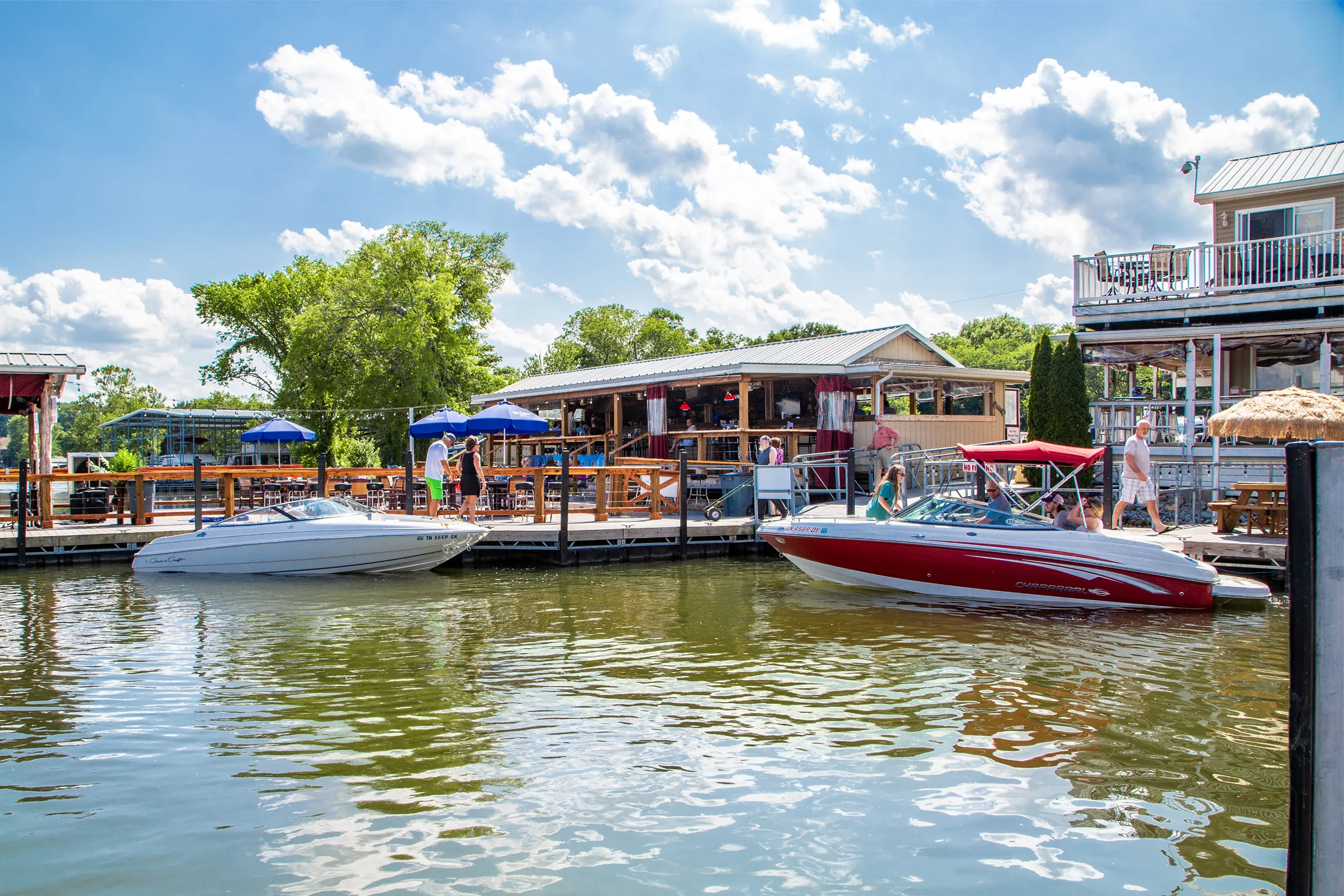
- Cedar Creek Marina (Mt. Juliet, primary boat ramp and marina for corridor residents)
- Multiple smaller boat ramps along Old Hickory Boulevard
- Long Hunter State Park (Wilson County portion, 15 minutes from most corridor addresses)
The Cedar Creek Greenway article covers the primary walking and biking trail that runs through the corridor, and the Charlie Daniels Park article covers Mt. Juliet's main city park.
Pros and Cons of the Corridor
Pros
- Shortest commute in Wilson County to downtown Nashville, BNA, and east-Nashville employers
- WeGo Star commuter rail access from Mt. Juliet — only Wilson County sub-area with rail option
- Deepest retail and dining footprint in Wilson County (Providence Marketplace, Costco, multiple grocery)
- Active new-construction pipeline across multiple price tiers and builder brands
- Old Hickory Lake access for waterfront recreation
- Wilson County Schools (A overall on Niche 2026) with three corridor high school options
Cons
- Most expensive part of Wilson County on a per-square-foot basis
- Active construction in the east-side corridor (Curd Road, Golden Bear Gateway) means ongoing road work, traffic patterns, and noise for the next 2-4 years
- I-40 peak commute traffic westbound to Nashville stretches 35-55 minutes during rush hours
- Mt. Juliet Road south of I-40 sees heavy retail-driven congestion on weekend afternoons
- Limited historic-walkable downtown character relative to Lebanon or Franklin
- Higher property tax bill than central or east Wilson because of the city plus county combined millage
Frequently Asked Questions
Where exactly is the west Wilson corridor? The west Wilson corridor covers Mt. Juliet, Green Hill, and the Wilson-County side of Old Hickory Lake — roughly the western third of Wilson County between the Davidson County line and Highway 109, including everything north of I-40 to the lake and a strip south of I-40 along the Mt. Juliet Road / Lebanon Road corridor.
Is Green Hill a separate city from Mt. Juliet? Yes. Green Hill incorporated as a separate city in 2020 from formerly-unincorporated Wilson County land east of Mt. Juliet. The two cities share school zoning (both Wilson County Schools) but have separate municipal governments and slightly different property tax rates.
What's the median home price in the west Wilson corridor? Approximately $560,000-$595,000 for single-family across the three corridor sub-areas as of May 2026 per Greater Nashville REALTORS data. Lakefront homes on Old Hickory's Wilson side run substantially higher — typically $750K to $2M+ depending on lot orientation and water frontage.
Is Old Hickory in Wilson County? The Old Hickory Lake shoreline straddles Wilson, Davidson, and Sumner counties. The Wilson-side strip — south of the lake, west of Highway 109 — is what this guide covers. Old Hickory Village (the more historic neighborhood with the dam and downtown core) sits in Davidson County and is not part of Wilson County.
Does the WeGo Star serve the whole corridor? The WeGo Star has one Wilson County station — Mt. Juliet, at 5300 Mt. Juliet Rd in downtown Mt. Juliet. Green Hill and Old Hickory Wilson-side residents can drive 10-15 minutes to the Mt. Juliet station for a park-and-ride commute. The train runs weekday peak hours only.
What schools are in the west Wilson corridor? All three corridor sub-areas are in Wilson County Schools. The primary high schools serving the corridor are Mt. Juliet High School (A on Niche 2026), Green Hill High School (A- on Niche), and Wilson Central High School (B+ on Niche).
How long is the commute from the corridor to Nashville? Off-peak commute from Mt. Juliet to downtown Nashville runs about 22 minutes via I-40 West. Peak commute stretches to 35-45 minutes during rush hours. Green Hill and Old Hickory Wilson-side commutes run 3-5 minutes longer.
Where's the new construction in the corridor? The bulk of new construction sits along Curd Road, Golden Bear Gateway, and Lebanon Road on the east side of Mt. Juliet, with substantial Green Hill activity along Sayle Road and Beckwith Road. Lakefront Old Hickory has very limited new construction because the area is mostly already built out.
Is the corridor a good choice for first-time buyers? The corridor's median price point ($560K-$595K) is at the higher end for first-time buyers in Wilson County. First-time buyers with $400K-$500K budgets often find better options in central Wilson County (Lebanon proper) or in eastern Mt. Juliet's older subdivisions. The first-time homebuyer guide for Wilson County covers that picture in more detail.
A Local's Take
The west Wilson corridor is where most relocating buyers should start their search if they work in Nashville or near BNA — period. The commute geometry is the best in Wilson County, the retail and dining are the deepest in Wilson County, and the new-construction pipeline gives buyers the most options at any moment. That's not a sales pitch; it's just the math of the metro.
Where I see buyers make mistakes is in not recognizing the sub-area differences. Mt. Juliet proper, Green Hill, and the Wilson-side Old Hickory aren't interchangeable. They have different price patterns, different lot sizes, different commute profiles, and different lifestyle textures. A buyer who wants Costco-adjacent suburban density should be touring east Mt. Juliet and Green Hill, not lakefront Old Hickory. A buyer who wants a half-acre lot with mature trees and a boat dock should be touring Old Hickory Wilson-side, not the Golden Bear Gateway new-build communities. Touring both and concluding "neither feels right" usually means the buyer was looking in the wrong sub-area, not that the corridor doesn't fit.
The honest counterweight is that the corridor's price premium over central and east Wilson County is real. The same 4BR/3BA new-construction spec that runs $625,000 on Curd Road runs $510,000 in Lebanon and $480,000 in Watertown. If commute geometry doesn't pin you to the corridor — say, you work remotely or commute east toward Cookeville — the value math gets more interesting fast. The Lebanon vs Mt. Juliet price trajectory article covers that east-vs-west Wilson question in detail, and it's worth working through before committing $80,000-$150,000 of price premium for a corridor address that may or may not match how you actually use the metro.
Get the Wilson County newsletter. Twice a week I send a short email covering new construction releases, market data, and corridor-specific updates from Mt. Juliet, Green Hill, and the Wilson-side Old Hickory market. If you're shopping the west Wilson corridor, the newsletter is the easiest way to stay current. Signup is in the navigation above.



Jacob Armbrester
A Nashville native, licensed real estate broker, and your go-to guide for all things Middle Tennessee. I’m here to help you uncover the perfect neighborhood, understand the market, and move confidently. From relocation tips to hidden local gems, I’ve got your back.

Jacob Armbrester is a real estate agent affiliated with compass, a licensed real estate broker and abides by equal housing opportunity laws. all material presented herein is intended for informational purposes only...

.png)


.png)
Contact Us

Jacob Armbrester is a real estate agent affiliated with compass, a licensed real estate broker and abides by equal housing opportunity laws. all material presented herein is intended for informational purposes only. information is compiled from sources deemed reliable but is subject to errors, omissions, changes in price, condition, sale, or withdrawal without notice. no statement is made as to accuracy of any description. all measurements and square footages are approximate. this is not intended to solicit property already listed. nothing herein shall be construed as legal, accounting or other professional advice outside the realm of real estate brokerage.